Lehrgebiet: Theoretische Informatik und künstliche Intelligenz
Büro: 01.214
Labor: 04.105
Telefon: +49 208 88254-806
E-Mail:
🛜 http://lab.iossifidis.net
Ioannis Iossifidis studierte Physik (Schwerpunkt: theoretische Teilchenphysik) an der Universität Dortmund und promovierte 2006 an der Fakultät für Physik und Astronomie der Ruhr-Universität Bochum.
Am Institut für Neuroinformatik leitete Prof. Dr. Iossifidis die Arbeitsgruppe Autonome Robotik und nahm mit seiner Forschungsgruppe erfolgreich an zahlreichen, vom BmBF und der EU, geförderten Forschungsprojekten aus dem Bereich der künstlichen Intelligenz teil. Seit dem 1. Oktober 2010 arbeitet er an der HRW am Institut Informatik und hält den Lehrstuhl für Theoretische Informatik – Künstliche Intelligenz.
Prof. Dr. Ioannis Iossifidis entwickelt seit über 20 Jahren biologisch inspirierte anthropomorphe, autonome Robotersysteme, die zugleich Teil und Ergebnis seiner Forschung im Bereich der rechnergestützten Neurowissenschaften sind. In diesem Rahmen entwickelte er Modelle zur Informationsverarbeitung im menschlichen Gehirn und wendete diese auf technische Systeme an.
Ausgewiesene Schwerpunkte seiner wissenschaftlichen Arbeit der letzten Jahre sind die Modellierung menschlicher Armbewegungen, der Entwurf von sogenannten «Simulierten Realitäten» zur Simulation und Evaluation der Interaktionen zwischen Mensch, Maschine und Umwelt sowie die Entwicklung von kortikalen exoprothetischen Komponenten. Entwicklung der Theorie und Anwendung von Algorithmen des maschinellen Lernens auf Basis tiefer neuronaler Architekturen bilden das Querschnittsthema seiner Forschung.
Ioannis Iossifidis’ Forschung wurde u.a. mit Fördermitteln im Rahmen großer Förderprojekte des BmBF (NEUROS, MORPHA, LOKI, DESIRE, Bernstein Fokus: Neuronale Grundlagen des Lernens etc.), der DFG («Motor‐parietal cortical neuroprosthesis with somatosensory feedback for restoring hand and arm functions in tetraplegic patients») und der EU (Neural Dynamics – EU (STREP), EUCogII, EUCogIII ) honoriert und gehört zu den Gewinnern der Leitmarktwettbewerbe Gesundheit.NRW und IKT.NRW 2019.
ARBEITS- UND FORSCHUNGSSCHWERPUNKTE
- Computational Neuroscience
- Brain Computer Interfaces
- Entwicklung kortikaler exoprothetischer Komponenten
- Theorie neuronaler Netze
- Modellierung menschlicher Armbewegungen
- Simulierte Realität
WISSENSCHAFTLICHE EINRICHTUNGEN
- Labor mit Verlinkung
- ???
- ???
LEHRVERANSTALTUNGEN
- ???
- ???
- ???
PROJEKTE
- Projekt mit Verlinkung
- ???
- ???
WISSENSCHAFTLICHE MITARBEITER*INNEN

Felix Grün
Büro: 02.216 (Campus Bottrop)

Marie Schmidt
Büro: 02.216 (Campus Bottrop)

Aline Xavier Fidencio
Gastwissenschaftlerin

Muhammad Ayaz Hussain
Doktorand

Tim Sziburis
Doktorand

Farhad Rahmat
studentische Hilfskraft
GOOGLE SCHOLAR PROFIL
Artikel
Schmidt, Marie D.; Glasmachers, Tobias; Iossifidis, Ioannis
Insights into Motor Control: Predict Muscle Activity from Upper Limb Kinematics with LSTM Networks Artikel
In: Nature Scientific Reports, 2026, ISSN: 2045-2322.
Abstract | Links | BibTeX | Schlagwörter: BCI, Computational biology and bioinformatics, Motor control, Neuroscience
@article{schmidtInsightsMotorControl2026,
title = {Insights into Motor Control: Predict Muscle Activity from Upper Limb Kinematics with LSTM Networks},
author = {Marie D. Schmidt and Tobias Glasmachers and Ioannis Iossifidis},
editor = {Nature Publishing Group},
url = {https://www.nature.com/articles/s41598-025-33696-y},
doi = {10.1038/s41598-025-33696-y},
issn = {2045-2322},
year = {2026},
date = {2026-01-05},
urldate = {2026-01-05},
journal = {Nature Scientific Reports},
publisher = {Nature Publishing Group},
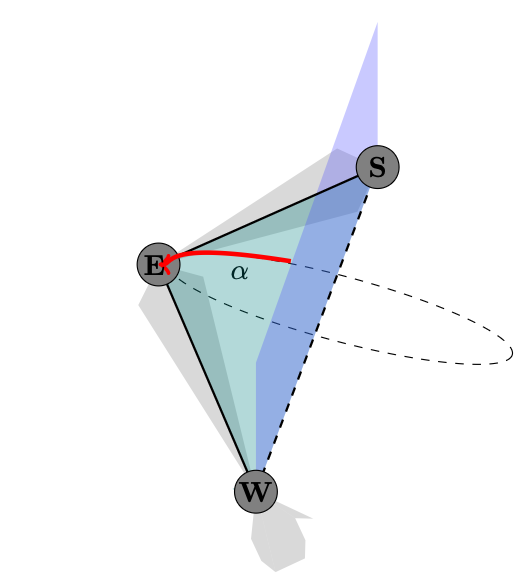
abstract = {This study explores the relationship between upper limb kinematics and corresponding muscle activity, aiming to understand how predictive models can approximate motor control. We employ a Long Short-Term Memory (LSTM) network trained on kinematic end effector data to estimate muscle activity for eight muscles. The model exhibits strong predictive accuracy for new repetitions of known movements and generalizes to unseen movements, suggesting it captures underlying biomechanical principles rather than merely memorizing patterns. This generalization is particularly valuable for applications in rehabilitation and human-machine interaction, as it reduces the need for exhaustive datasets. To further investigate movement representation and learning, we analyze the impact of motion segmentation, hypothesizing that breaking movements into simpler components may improve model performance. Additionally, we explore the role of the swivel angle in reducing redundancy in arm kinematics. Another key focus is the effect of training data complexity on generalization. Specifically, we assess whether training on a diverse set of movements leads to better performance than specializing in either simple, single-joint movements or complex, multi-joint movements. The study is based on an experimental setup involving 23 distinct upper limb movements performed by five subjects. Our findings provide insights into the interplay between kinematics and muscle activity, contributing to motor control research and advancing neural network-based movement prediction.},
keywords = {BCI, Computational biology and bioinformatics, Motor control, Neuroscience},
pubstate = {published},
tppubtype = {article}
}