Schmidt, Marie D.; Iossifidis, Ioannis The Spatial and~Temporal Resolution of~Motor Intention in~Multi-target Prediction Proceedings Article In: Neumann, Philipp; Puma, Michael J.; Lees, Michael H.; Groen, Derek; Dongarra, Jack J.; Sloot, Peter M. A. (Hrsg.): Computational Science – ICCS 2026, S. 421–428, Springer Nature Switzerland, Cham, 2026, ISBN: 978-3-032-29924-6. Abstract | Links | BibTeX | Schlagwörter: BCI, EMG, HMI, Motor control, Random Forest Schmidt, Marie Dominique; Iossifidis, Ioannis The Spatial and Temporal Resolution of Motor Intention in Multi-Target Prediction Artikel In: arXiv:2603.05418 [q-bio.NC], 2026. Abstract | Links | BibTeX | Schlagwörter: BCI, Machine Learning, Motor control Schmidt, Marie D.; Glasmachers, Tobias; Iossifidis, Ioannis Insights into Motor Control: Predict Muscle Activity from Upper Limb Kinematics with LSTM Networks Artikel In: Nature Scientific Reports, 2026, ISSN: 2045-2322. Abstract | Links | BibTeX | Schlagwörter: BCI, Computational biology and bioinformatics, Motor control, Neuroscience Sziburis, Tim; Blex, Susanne; Glasmachers, Tobias; Iossifidis, Ioannis Hand Motion Catalog of Human Center-Out Transport Trajectories Measured Redundantly in 3D Task-Space Artikel In: Bd. 12, Nr. 1, S. 1293, 2025, ISSN: 2052-4463. Abstract | Links | BibTeX | Schlagwörter: BCI, Biomedical engineering, Motor control, Physiology Sziburis, Tim; Blex, Susanne; Glasmachers, Tobias; Iossifidis, Ioannis Deep-learning-based identification of individual motion characteristics from upper-limb trajectories towards disorder stage evaluation Proceedings Article In: Pons, Jose L.; Tornero, Jesus; Akay, Metin (Hrsg.): Converging Clinical and Engineering Research on Neurorehabilitation V - Proceedings of the 6th International Conference on Neurorehabilitation (ICNR2024), Springer International Publishing, La Granja, Spain, 2024. BibTeX | Schlagwörter: BCI, human arm motion, Motor control2026

@inproceedings{schmidtSpatialTemporalResolution2026,
title = {The Spatial and~Temporal Resolution of~Motor Intention in~Multi-target Prediction},
author = {Marie D. Schmidt and Ioannis Iossifidis},
editor = {Philipp Neumann and Michael J. Puma and Michael H. Lees and Derek Groen and Jack J. Dongarra and Peter M. A. Sloot},
doi = {10.1007/978-3-032-29924-6_36},
isbn = {978-3-032-29924-6},
year = {2026},
date = {2026-06-27},
urldate = {2026-06-27},
booktitle = {Computational Science – ICCS 2026},
pages = {421–428},
publisher = {Springer Nature Switzerland},
address = {Cham},
abstract = {Reaching, grasping, and object manipulation are essential motor functions in everyday life. This study predicts movement direction and target location from multichannel electromyography (EMG) signals, examining how spatially and temporally accurate intentions can be detected relative to movement onset. A computational pipeline combining data-driven temporal segmentation with Random Forest model is applied to EMG data across planning, execution, and contact phases of a reaching task.},
keywords = {BCI, EMG, HMI, Motor control, Random Forest},
pubstate = {published},
tppubtype = {inproceedings}
}
@article{schmidt2026spatialtemporalresolutionmotor,
title = {The Spatial and Temporal Resolution of Motor Intention in Multi-Target Prediction},
author = {Marie Dominique Schmidt and Ioannis Iossifidis},
url = {https://arxiv.org/abs/2603.05418},
doi = {https://doi.org/10.48550/arXiv.2603.05418},
year = {2026},
date = {2026-03-05},
urldate = {2026-03-05},
journal = {arXiv:2603.05418 [q-bio.NC]},
abstract = {Reaching for grasping, and manipulating objects are essential motor functions in everyday life. Decoding human motor intentions is a central challenge for rehabilitation and assistive technologies. This study focuses on predicting intentions by inferring movement direction and target location from multichannel electromyography (EMG) signals, and investigating how spatially and temporally accurate such information can be detected relative to movement onset. We present a computational pipeline that combines data-driven temporal segmentation with classical and deep learning classifiers in order to analyse EMG data recorded during the planning, early execution, and target contact phases of a delayed reaching task.
Early intention prediction enables devices to anticipate user actions, improving responsiveness and supporting active motor recovery in adaptive rehabilitation systems. Random Forest achieves 80% accuracy and Convolutional Neural Network 75% accuracy across 25 spatial targets, each separated by 14∘ azimuth/altitude. Furthermore, a systematic evaluation of EMG channels, feature sets, and temporal windows demonstrates that motor intention can be efficiently decoded even with drastically reduced data. This work sheds light on the temporal and spatial evolution of motor intention, paving the way for anticipatory control in adaptive rehabilitation systems and driving advancements in computational approaches to motor neuroscience.},
keywords = {BCI, Machine Learning, Motor control},
pubstate = {published},
tppubtype = {article}
}
Early intention prediction enables devices to anticipate user actions, improving responsiveness and supporting active motor recovery in adaptive rehabilitation systems. Random Forest achieves 80% accuracy and Convolutional Neural Network 75% accuracy across 25 spatial targets, each separated by 14∘ azimuth/altitude. Furthermore, a systematic evaluation of EMG channels, feature sets, and temporal windows demonstrates that motor intention can be efficiently decoded even with drastically reduced data. This work sheds light on the temporal and spatial evolution of motor intention, paving the way for anticipatory control in adaptive rehabilitation systems and driving advancements in computational approaches to motor neuroscience.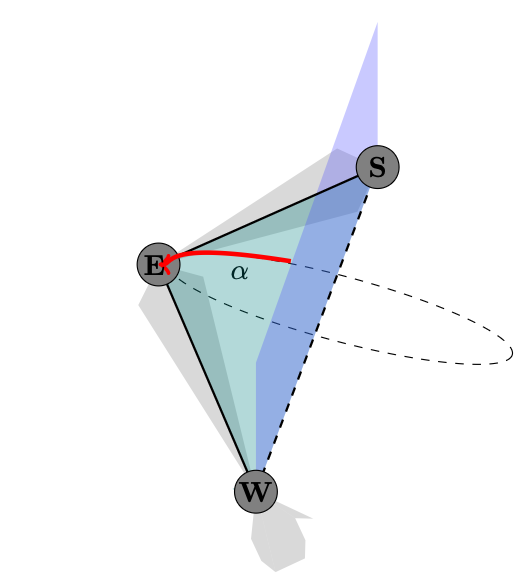
@article{schmidtInsightsMotorControl2026,
title = {Insights into Motor Control: Predict Muscle Activity from Upper Limb Kinematics with LSTM Networks},
author = {Marie D. Schmidt and Tobias Glasmachers and Ioannis Iossifidis},
editor = {Nature Publishing Group},
url = {https://www.nature.com/articles/s41598-025-33696-y},
doi = {10.1038/s41598-025-33696-y},
issn = {2045-2322},
year = {2026},
date = {2026-01-05},
urldate = {2026-01-05},
journal = {Nature Scientific Reports},
publisher = {Nature Publishing Group},
abstract = {This study explores the relationship between upper limb kinematics and corresponding muscle activity, aiming to understand how predictive models can approximate motor control. We employ a Long Short-Term Memory (LSTM) network trained on kinematic end effector data to estimate muscle activity for eight muscles. The model exhibits strong predictive accuracy for new repetitions of known movements and generalizes to unseen movements, suggesting it captures underlying biomechanical principles rather than merely memorizing patterns. This generalization is particularly valuable for applications in rehabilitation and human-machine interaction, as it reduces the need for exhaustive datasets. To further investigate movement representation and learning, we analyze the impact of motion segmentation, hypothesizing that breaking movements into simpler components may improve model performance. Additionally, we explore the role of the swivel angle in reducing redundancy in arm kinematics. Another key focus is the effect of training data complexity on generalization. Specifically, we assess whether training on a diverse set of movements leads to better performance than specializing in either simple, single-joint movements or complex, multi-joint movements. The study is based on an experimental setup involving 23 distinct upper limb movements performed by five subjects. Our findings provide insights into the interplay between kinematics and muscle activity, contributing to motor control research and advancing neural network-based movement prediction.},
keywords = {BCI, Computational biology and bioinformatics, Motor control, Neuroscience},
pubstate = {published},
tppubtype = {article}
}
2025
@article{sziburisHandMotionCatalog2025,
title = {Hand Motion Catalog of Human Center-Out Transport Trajectories Measured Redundantly in 3D Task-Space},
author = {Tim Sziburis and Susanne Blex and Tobias Glasmachers and Ioannis Iossifidis},
editor = {Nature},
url = {https://www.nature.com/articles/s41597-025-05576-7},
doi = {10.1038/s41597-025-05576-7},
issn = {2052-4463},
year = {2025},
date = {2025-07-24},
urldate = {2025-07-24},
volume = {12},
number = {1},
pages = {1293},
publisher = {Nature Publishing Group},
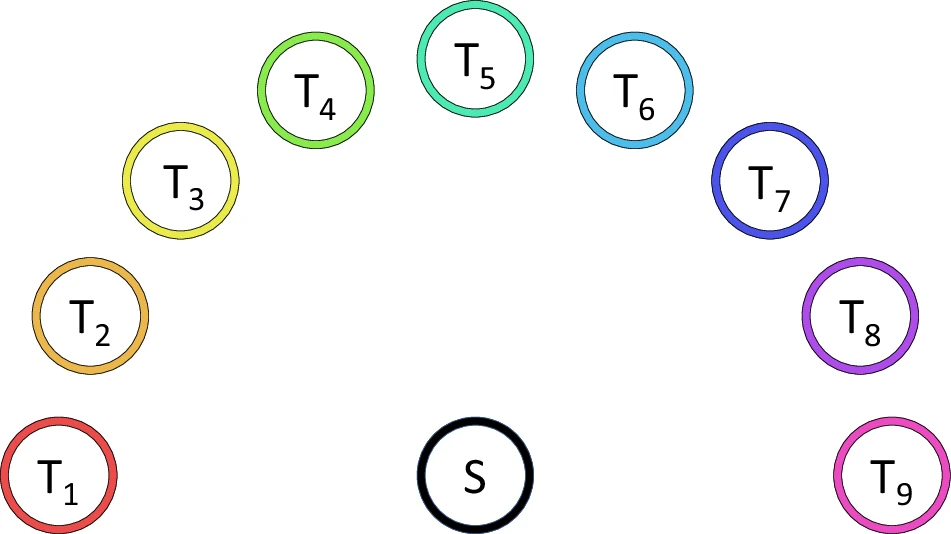
abstract = {Motion modeling and variability analysis bear the potential to identify movement pathology but require profound data. We introduce a systematic dataset of 3D center-out task-space trajectories of human hand transport movements in a standardized setting. This set-up is characterized by reproducibility, leading to reliable transferability to various locations. The transport tasks consist of grasping a cylindrical object from a unified start position and transporting it to one of nine target locations in unconstrained operational space. The measurement procedure is automatized to record ten trials per target location and participant. The dataset comprises 90 movement trajectories for each hand of 31 participants without known movement disorders (21 to 78 years), resulting in 5580 trials. In addition, handedness is determined using the EHI. Data are recorded redundantly and synchronously by an optical tracking system and a single IMU sensor. Unlike the stationary capturing system, the IMU can be considered a portable, low-cost, and energy-efficient alternative to be implemented on embedded systems, for example in medical evaluation scenarios.},
keywords = {BCI, Biomedical engineering, Motor control, Physiology},
pubstate = {published},
tppubtype = {article}
}
2024
@inproceedings{icnr2024,
title = {Deep-learning-based identification of individual motion characteristics from upper-limb trajectories towards disorder stage evaluation},
author = {Tim Sziburis and Susanne Blex and Tobias Glasmachers and Ioannis Iossifidis},
editor = {Jose L. Pons and Jesus Tornero and Metin Akay},
year = {2024},
date = {2024-11-30},
urldate = {2024-11-30},
booktitle = {Converging Clinical and Engineering Research on Neurorehabilitation V - Proceedings of the 6th International Conference on Neurorehabilitation (ICNR2024)},
publisher = {Springer International Publishing},
address = {La Granja, Spain},
series = {Biosystems and Biorobotics},
keywords = {BCI, human arm motion, Motor control},
pubstate = {published},
tppubtype = {inproceedings}
}
The Spatial and~Temporal Resolution of~Motor Intention in~Multi-target Prediction Proceedings Article In: Neumann, Philipp; Puma, Michael J.; Lees, Michael H.; Groen, Derek; Dongarra, Jack J.; Sloot, Peter M. A. (Hrsg.): Computational Science – ICCS 2026, S. 421–428, Springer Nature Switzerland, Cham, 2026, ISBN: 978-3-032-29924-6. The Spatial and Temporal Resolution of Motor Intention in Multi-Target Prediction Artikel In: arXiv:2603.05418 [q-bio.NC], 2026. Insights into Motor Control: Predict Muscle Activity from Upper Limb Kinematics with LSTM Networks Artikel In: Nature Scientific Reports, 2026, ISSN: 2045-2322. Hand Motion Catalog of Human Center-Out Transport Trajectories Measured Redundantly in 3D Task-Space Artikel In: Bd. 12, Nr. 1, S. 1293, 2025, ISSN: 2052-4463. Deep-learning-based identification of individual motion characteristics from upper-limb trajectories towards disorder stage evaluation Proceedings Article In: Pons, Jose L.; Tornero, Jesus; Akay, Metin (Hrsg.): Converging Clinical and Engineering Research on Neurorehabilitation V - Proceedings of the 6th International Conference on Neurorehabilitation (ICNR2024), Springer International Publishing, La Granja, Spain, 2024.2026
2025
2024